If entertainment headlines feel like a foreign language, you’re not alone. How the film industry works comes down to this: rights unlock money, money makes the film, and release windows earn it back.
| Item | Key fact |
|---|---|
| Chain of title | Written evidence that the producer controls all the rights |
| Financing routes | Debt financing, participation deals, equity financing and crowdfunding |
| Licence versus assignment | A licence lasts a limited time; an assignment is most often a full copyright term |
| VOD timing | Steps in right after the theatrical window |
| Planning elements | Three: artistic, financial and legal |
| WIPO film finance primer | Working Paper No. 74, published 2023 |
These facts come from WIPO’s page on making a living from movie copyright and its film finance primer. Figures and practices can change, so check the source before you rely on them.
From idea to audience: the basic chain
On paper, every film is a business proposal before it is a movie. A WIPO guide for independent filmmakers describes an audiovisual project as, in practice, a business proposal, and in the vast majority of cases a risky one. The same guide to development and pitching says a filmmaker must show feasibility and potential success long before the first scene is shot.
That guide names three main elements to weigh from a practical perspective: artistic, financial and legal. These elements are always interrelated, because a change in one area may affect another, as the same WIPO guide explains.
WIPO’s page on movie copyright says copyright and related rights are present throughout the development of content, financing, marketing and distribution of films. Read that way, a film moves through a handful of linked stages:
- Development: the concept, script and budget are planned, and the rights to the story are secured.
- Financing: money is raised, with the rights in the film as the main asset.
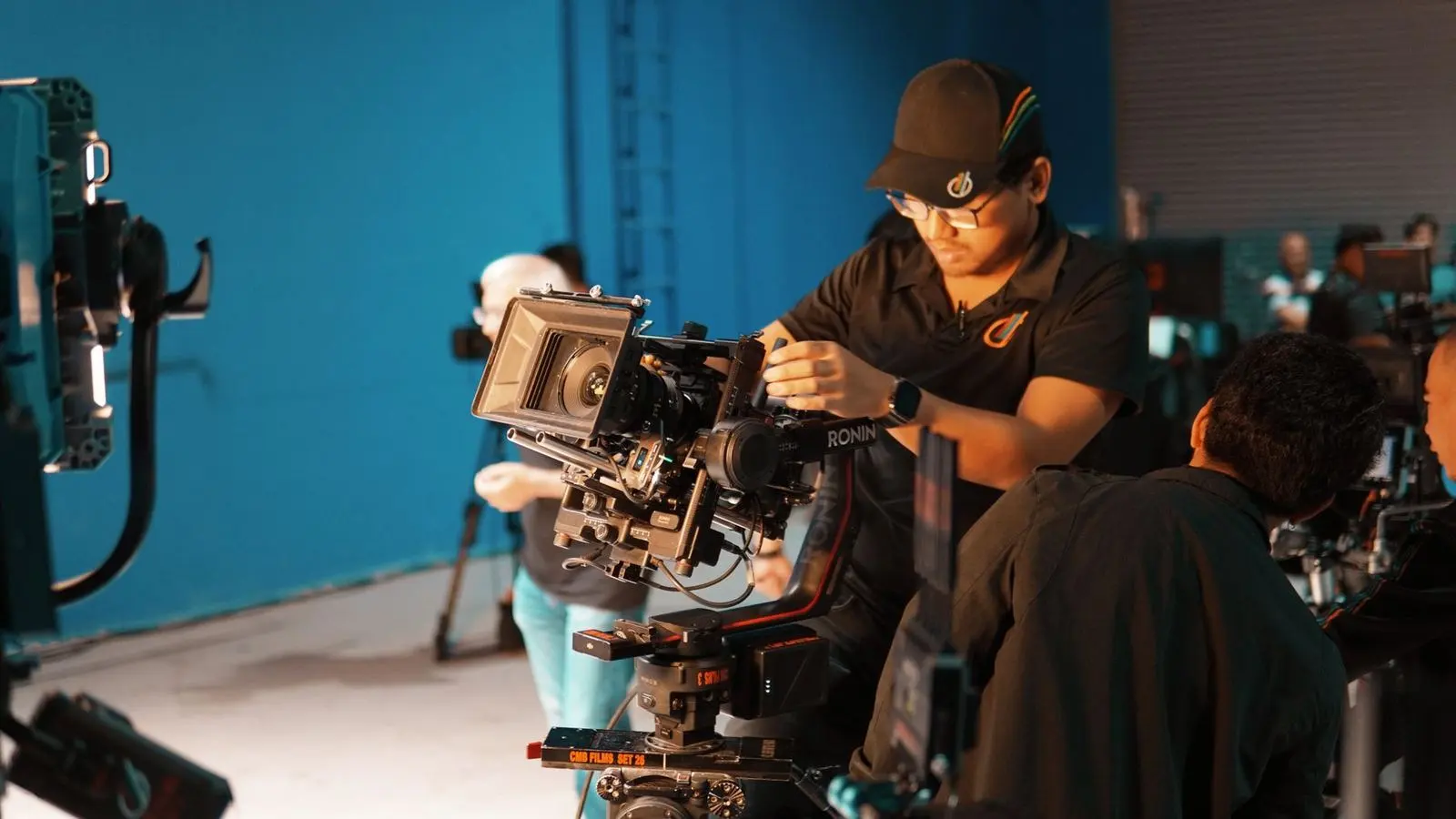
- Production: producers, executive producers, associate producers or production companies work as a team.
- Distribution: the film is released to the public or licensed to sub-distributors.
- Video on demand and later windows: platforms step in after the cinema run.
Our walkthrough of the stages of film production covers the making side step by step.
Why rights and chain of title come first
Film production is based on an assurance that all the rights in the underlying material are acquired or licensed, including those of the writer commissioned to write the script, according to WIPO. The producer also needs written evidence that they are in control of all those rights.
That paperwork is called chain of title. WIPO says no bank or other source of funding in the mature film industries will financially support a film without assurance that a court injunction will not halt it (source). A second WIPO guide defines it as the unbroken record of ownership of the copyright and other legal rights in the film property (source).
A related step is rights clearance, which that guide says has two main objectives: to reduce the legal risks in the production and the final content, including for obtaining insurance, and to ensure the chain of title. The clearance guide says the process ends in one of these ways:
- The content is used because no licence is needed.
- The content is used in line with the licence obtained.
- The content is replaced with something else.
- The content is removed altogether.
Rights are also territorial. Protection follows the laws of each place where a film is exploited, and the decision on infringement generally looks to the laws where the film or series reaches audiences, with some exceptions for an entertainment lawyer to judge (WIPO).
Ownership also matters when you read deal news. The same source says the person orchestrating the elements into one product for audiences is the producer, who owns the copyright over the finished film, documentary or series (WIPO).
Who pays for a film?
Money is needed at every stage, and WIPO says the most valuable asset in film financing is the IP rights in the film. That is why clean ownership shows up in so many financing stories.
The same page says various forms of financing are available:
- Debt financing
- Participation deals
- Equity financing
- Crowdfunding
WIPO’s film finance primer, a working paper published in 2023, is a useful companion. It rests on expert interviews and exploratory data analysis, and it covers common deals and recurring funding practices in the U.S. movie industry over the past twenty years. It also shows how the private sector manages risk and uncertainty around new film finance.
Filmmakers also choose whether to license or assign their film rights. From a producer’s point of view, a licence only grants rights for a limited time, whereas an assignment is most often a full-period-of-copyright term, according to WIPO.
Public policy enters the picture too. A report commissioned by BFI from Olsberg•SPI with Nordicity, dated December 2021, studies tax reliefs for the UK screen sector and includes a global comparison of production incentives for film, television and video games (Screen Business report). Treat it as one country’s view rather than a universal rule.

Studios, distributors and sales agents
Film studios play a major role in film creation, production and distribution. WIPO adds that they keep distribution offices in each of the principal territories, following a global distribution strategy, and that they are also potential financiers of a film.
Film distribution earns revenue from the underlying copyright. A distributor either releases the film to the public or licenses the rights to sub-distributors, who release it in a specific territory, language and medium as the distribution agreement sets out (WIPO).
Between the maker and the distributor sit the sellers. The contents of WIPO’s From Script to Screen list producer’s representatives, international sales agents and aggregators as sellers. The same training tool outlines these distribution business models:
- The single global distributor model
- Split rights deals
- Self-distribution
A film is a team effort. WIPO describes complementary functions for film producers, executive producers, associate producers or production companies, and notes that movies are the result of collaborative efforts (source).
Release windows and where streaming fits
The order in which a film reaches different audiences is called its distribution windows. From Script to Screen has a section on windows and the order of commercialization. The UK report’s film chapter breaks the value chain into production, distribution, cinema exhibition and secondary windows (Screen Business).
Streaming slots into that order. WIPO says VOD platforms are increasingly important and step in right after the theatrical window. It adds that the growth of online VOD, especially subscription services, has been impressive, and that VOD has a profound impact on existing distribution models.
For producers, that means more ways to license rights. The same page says VOD increases substantially the range of licensing opportunities for film producers.
Dates inside this system are rarely fixed. For the reasons a premiere slips, see our page that asks why do movie release dates change, and for what reported totals mean, start with box office explained.
When a title reaches home screens, our guide on how to stream movies covers licensed ways to watch.

How should you read film industry headlines?
Treat a headline as a claim and ask which part of the chain it touches. A few common patterns translate like this:
- A rights or acquisition story is about ownership, and whether a licence or an assignment is involved.
- A financing story is about debt, equity, participation deals, crowdfunding or a studio backing the film.
- A distribution story is about who may release the film, and in which territory, language and medium.
- A streaming story is about video on demand rights, which follow the theatrical window.
Prize coverage follows its own logic, which our overview of the major film awards unpacks. For opinions on individual titles, browse our movie reviews.
Finally, check where a story came from. Our guide to reliable movie news sources shows how to separate trade reporting from rumour.
This site is an independent educational publication. It has no affiliation with studios, filmmakers or streaming services, and it covers only licensed ways to watch.
Frequently asked questions
What does chain of title mean in plain terms?
Show answer
Think of it as a paper trail showing who owns what in a film. WIPO’s clearance guide calls it a condition for the circulation of the film in the market, and says distributors and sales agents expect the producer to assert it (source).
Is a studio the same thing as a distributor?
Show answer
Not always. A studio can create, produce, distribute and even finance, while distribution can also run through sub-distributors licensed for particular regions, languages or formats (WIPO).
Does streaming replace the cinema?
Show answer
WIPO’s description places video on demand immediately behind the cinema run, which makes it a later step in a film’s life rather than a stand-in for it (source). Release plans differ from film to film, so check each title’s announcement.
Do the same rules apply in every country?
Show answer
Laws differ by place, yet WIPO notes an overall similarity on minimum protection, and copyright treaties include the Berne Convention (WIPO). For a specific dispute, the guide points readers to an entertainment lawyer.