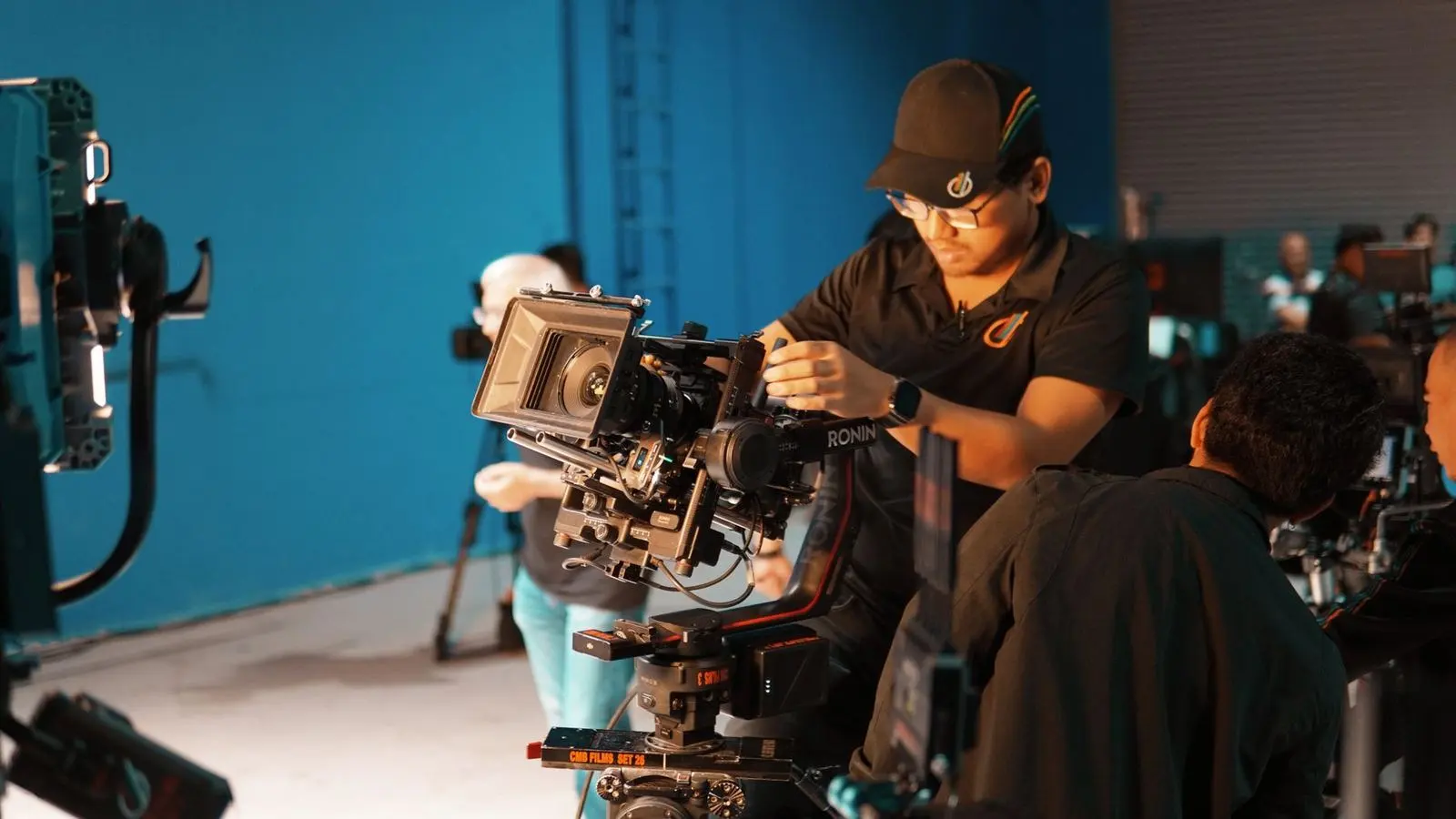

Wondering how a film gets from idea to screen? The stages of film production cover development, financing, pre-production, production, post-production, delivery, and sales, marketing and distribution. This guide shows you each one.
For the wider picture, read our overview of how the film industry works.
| Item | Value |
|---|---|
| Phases in Screen Ireland’s outline production process | Financing, pre-production, development, production, post-production, sales, marketing and distribution, delivery |
| Minimum running time for BFI development funding | At least 70 minutes |
| BFI funding total after which a clear route to production is needed | £60,000 |
| Maximum writer or director shareholding in the applicant company | 50% |
| Minimum team size across writer, producer and director roles | At least two people |
The figures above come from Screen Ireland’s competency framework for producers and the BFI’s development funding guidelines. Guidance can change, so check the source before you rely on the figures.
What are the stages of film production?
The competency framework from Screen Producers Ireland and Screen Ireland sets out an outline production process that shows the most common project phases. It names financing, pre-production, development, production, post-production, delivery, and sales, marketing and distribution.
That list is an outline, not a timetable. To give you a readable map, this guide groups the phases in the order most viewers picture them:
- Development, where the project takes shape.
- Financing and pre-production, where it becomes a plan.
- Production, post-production and delivery, where the film gets made.
- Sales, marketing and distribution, where it reaches an audience.
Development: where a project takes shape
The BFI says its National Lottery development funding supports film projects that are unlikely to be commercially or privately financed at an early stage. You can read the detail in the BFI’s application guidelines.
Funding can arrive in rounds, because the BFI may fund several stages of a development project and make a new award at each one. Once a project has an accumulated total of £60,000 from the BFI through earlier stages, it must be able to articulate a clear route to production before it can access more, according to the same guidelines.
The guidelines are specific about the team. A team must include at least two people across the three creative roles of writer, producer and director, and the writer and director can be the same person, as the BFI’s rules explain.
- The application comes from a limited company registered at Companies House, not from an individual.
- A dedicated lead producer must be named, and that person is not also the writer or director.
- A writer must be attached, or attaching, to the project.
Ownership has a limit too. A writer or director may co-own the applicant company but can hold no more than a 50% shareholding, and the project must be a stand-alone live action or animated fiction work with an intended running time of at least 70 minutes, per the BFI.
Rights also come into play early. The applicant production company must have secured, or be in the process of securing, the rights in the project, including any underlying adaptation rights.
These are one funder’s rules for one scheme. Treat them as an example of how development is gatekept, not as a universal definition of the phase.

Financing and pre-production: turning an idea into a plan
Screen Ireland’s framework states an aim of helping producers develop and lead a project from initial idea, through financing, to delivery. It also expects producers to build a cast, crew and group of stakeholders who can fulfil the creative vision, as the framework sets out.
That is a wide brief. The same document recognises responsibility that runs from creative leadership and financial oversight to ethical practice and team management.
The BFI sets a similar bar for the person leading a feature in development. Its guidelines require a lead producer able to deal with the financial, technical and legal aspects of feature film development.
Neither source breaks pre-production into a task list, so this guide does not invent one.
Production, post-production, delivery and distribution
Production, post-production and delivery each appear as their own phase in the framework’s outline, alongside sales, marketing and distribution. How each one runs depends on the project: budgets, timelines, the on-set environment, locations, the scale of the work and the story being told all shape how it is managed, as the Screen Ireland framework notes.
The framework also says that no one way of working can cover every eventuality of filming. That is why two films can follow quite different paths to the same finish line.
Once a film reaches viewers, some titles enter the conversation around major film awards. When you choose how to watch, stick to licensed cinemas and services.
If you want to follow a project as it moves between phases, our guide to reliable movie news sources shows where to look first.
Who steers a film through every stage?
Producers play a central role in shaping stories and in navigating the complex creative and logistical pathways that bring them to life, according to the framework’s foreword.
The document is written from the viewpoint of a creative producer, who is involved in all stages, contributes creatively and takes on broader business planning. Not every producer job covers that much ground.
It names the development producer as one role that may own only part of the overall process, so only a portion of the framework would apply to it.
Frequently asked questions
Which stage of a film comes first?
Show answer
Development is the usual starting point. The BFI aims its development scheme at projects at an early stage, per its guidelines, while Screen Ireland’s outline lists development among its phases without ranking them.
Can a writer produce their own film under the BFI’s development funding?
Show answer
Not under that scheme. The BFI guidelines state that a writer cannot be their own producer, so a separate lead producer has to submit the application.
Does the same framework cover TV and animation, or only film?
Show answer
It is meant to apply to producers across film, TV and animation. Titles such as associate producer, co-producer, series producer and executive producer each call for a different mix of competencies, according to Screen Ireland’s document.